LexisNexis · 2nd Edition
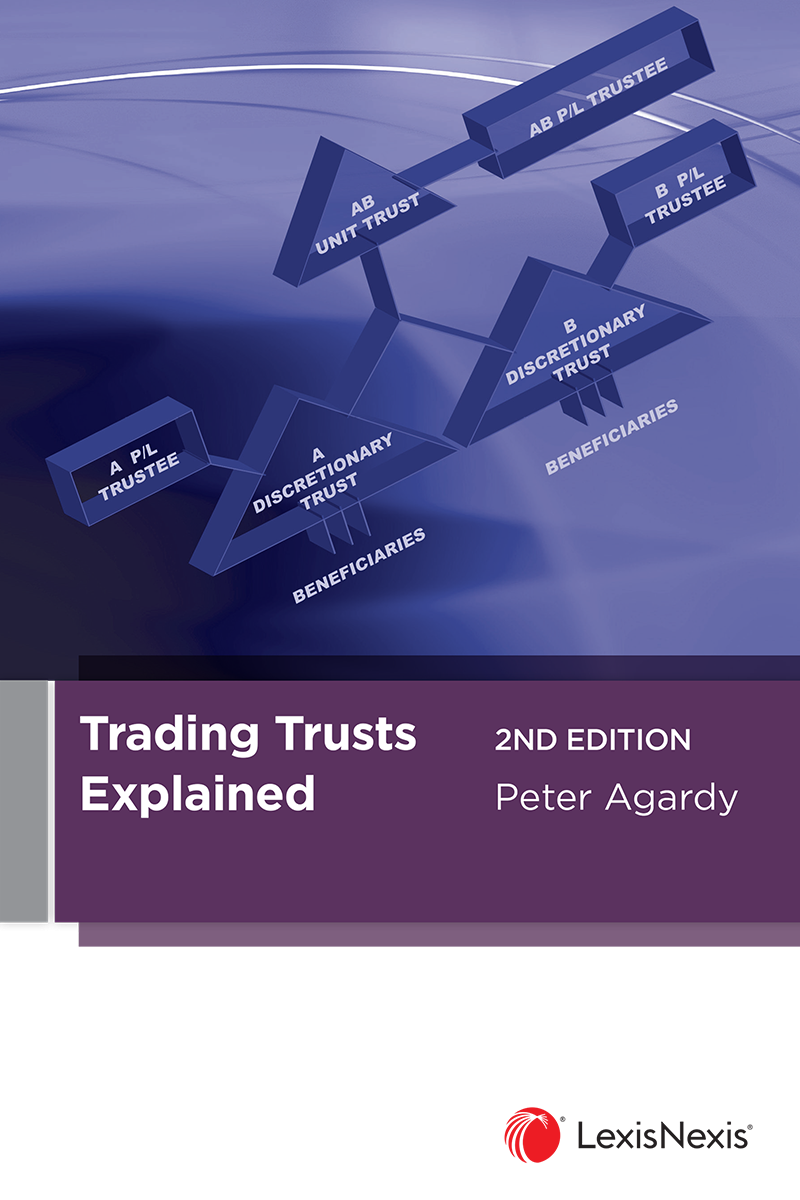
Trading Trusts Explained
Second Edition
How trading trusts work
Buy from LexisNexisISBN 9780409358407
About the book
Overview
Trading Trusts Explained 2nd edition is a quick introductory reference that aims to guide the commercial readers through the maze that is the interaction of corporations law and trust law.
This edition of Trading Trusts Explained considers a few significant developments in this area of the law since 2018. One is the decision of the High Court in Carter Holt Harvey Woodproducts Australia Pty Ltd v The Commonwealth of Australia. The thrust of that decision is that the priorities set out in the Corporations Act 2001 (Cth) apply when a company in liquidation is the trustee of a trading trust. Another is the Commonwealth Government review, Parliamentary Joint Committee on Corporations and Financial Services into corporate insolvency in Australia. The committee accepted that 'cohesive legislative reform' is warranted.
Features
An accessible introduction to a complex area of Australian commerce
Covers the entire life cycle of a trading trust in many short chapters
Suitable for anyone starting out in practice as a commercial lawyer, an accountant in private practice, or a student completing a practical legal training course on commercial law
Includes a useful chart of companies and trusts often recommended by lawyers and accountants for a trading entity
Provides examples of trust deeds
Comes with a checklist of questions to ask before adopting a trading structure.
Inside the book
Contents
- Chapter 01 — Introduction
- Chapter 02 — Typical Structure
- Chapter 03 — Establishing the Structure
- Chapter 04 — Basic Principles
- Chapter 05 — Advantages and Disadvantages
- Chapter 06 — The Growth of Trading Trusts
- Chapter 07 — Control Without Ownership
- Chapter 08 — Tax Treatment
- Chapter 09 — Existence of A Trust
- Chapter 10 — Accounting
- Chapter 11 — Dispute
- Chapter 12 — Mediation
- Chapter 13 — Indemnity from Trust Assets
- Chapter 14 — Indemnity from Beneficiaries
- Chapter 15 — Creditors' Right of Subrogation to the Right of Indemnity
- Chapter 16 — Exclusion of the Right of Indemnity
- Chapter 17 — Disqualification of Trustees
- Chapter 18 — Company Winding Up
- Chapter 19 — Winding Up A Trust
- Chapter 20 — Replacement of A Trustee
- Chapter 21 — Appointment of A Receiver
- Chapter 22 — Challenging A Trustee
- Chapter 23 — Personal Liability of Directors of Trustee Companies
- Chapter 24 — Asset Protection
- Chapter 25 — Procedure
- Chapter 26 — Trustee's Power of Sale
- Chapter 27 — Remuneration
- Chapter 28 — Conclusion
- Appendix 1 — Chart of Companies and Trusts
- Appendix 2 — Examples of Trust Deeds
- Appendix 3 — Checklist
Testimonials
“The text is succinct and focused. Twenty seven chapters in under 200 pages – the basic principles and structure of trusts, why trading trusts have evolved, what purposes they serve, the relevant accounting standards, disputes and mediation, indemnities, creditors’ claims, disqualification of trustees, insolvency, personal liability, powers of sale, remuneration of trustees, and asset protection.”
Michael H Murray