LexisNexis · 2nd Edition
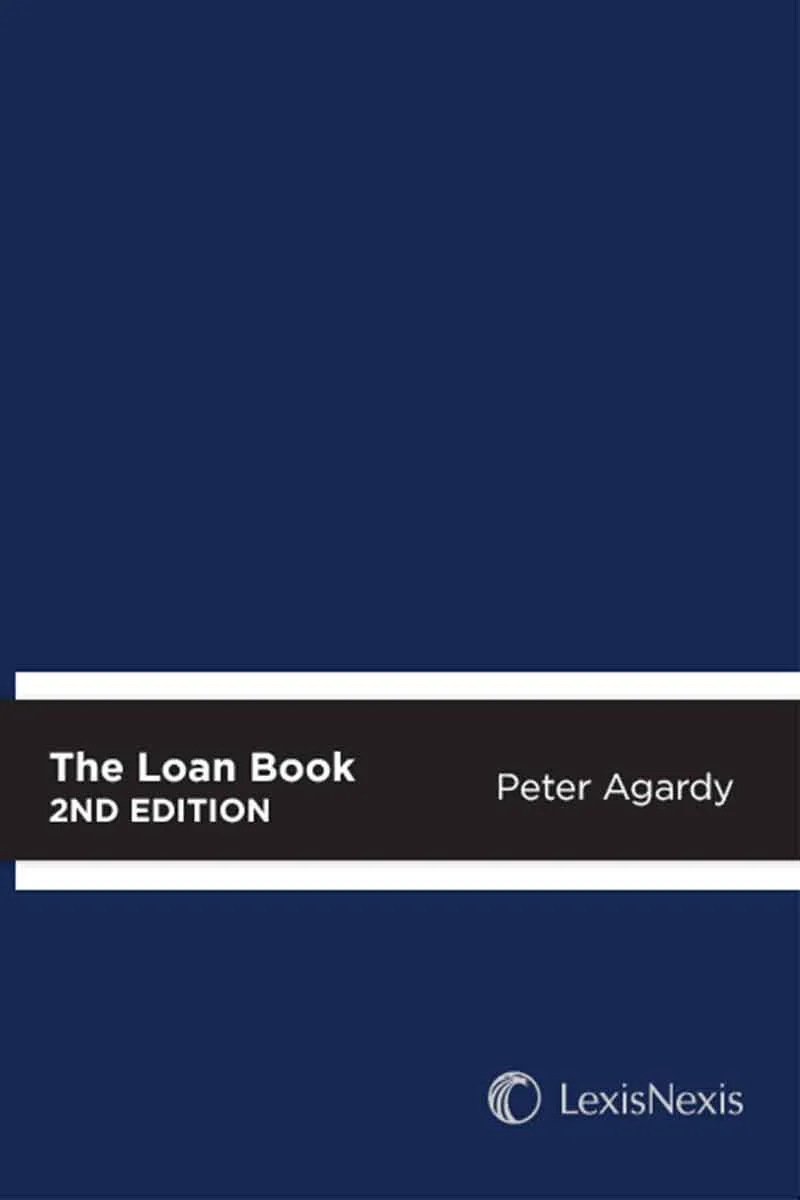
The Loan Book
Second Edition — Australian Lending Law
An analysis of the unsecured loan. Elements, proof and recovery.
Buy from LexisNexisISBN 9780409362428
Also available from
About the book
Overview
The Loan Book 2nd edition covers a wide range of issues that arise with unsecured loans. It strives to make the relevant law accessible not only to lawyers, accountants and business people but also to the general public. Topics examined include when a loan is repayable when no term has been agreed, when is a lender entitled to charge interest and when is a payment a gift and not a loan. These matters can be troublesome in family relationships, such as in the payments made by the 'bank of mum and dad'. Loans and alleged gifts feature in family law property disputes, also in the administration of deceased estates.
A liquidator appointed to an insolvent company faces challenges when seeking to recover payments made from company funds for the benefit of directors, especially when the payments are not recorded as loans in the company records. The Loan Book 2nd edition also deals with what evidence is required to prove that money is owed.
Inside the book
Contents
- Chapter 1 — Debtor–Creditor Relationship
- Chapter 2 — The Contract of Loan
- Chapter 3 — Interest
- Chapter 4 — Implied Loan Agreement
- Chapter 5 — Implied Terms
- Chapter 6 — Is There a Loan at All?
- Chapter 7 — Fact of Payment and No More
- Chapter 8 — Loan or Gift?
- Chapter 9 — Suing on Loan Account
- Chapter 10 — Money had and received
- Chapter 11 — Evidence
- Chapter 12 — Book Entries
- Chapter 13 — When Is a Loan Repayable?
- Chapter 14 — Statute Barred
- Chapter 15 — Effect on Solvency of Company
- Chapter 16 — Challenges for Liquidators and Trustees in Bankruptcy
- Chapter 17 — Family Law
- Chapter 18 — Deceased Estates and Older People
- Chapter 19 — Assignment
- Chapter 20 — Debt Forgiveness
- Chapter 21 — Recovery of Loan
- Chapter 22 — Beware Loan Account
- Chapter 23 — Fraudulent Transactions
- Chapter 24 — Deeds
- Chapter 25 — Loans: General Principles
- Appendix — Basic Loan Agreement
Review
Book review
The Loan Book, Peter Agardy, LexisNexis, 2025, ISBN 9780409362428
The full title of this latest work from Victorian Barrister Peter Agardy is “The Loan Book, An Analysis of the Unsecured Loan: Elements, Proof and Recovery.”
I had the great pleasure of reviewing the first edition of this work in 2020. That edition like the present deals with what are commonly known as “simple contracts”, that is, agreements made in writing or by word-of-mouth, otherwise than by deed.
However, as some loan agreements are expressed to be by deed, the author has added a chapter addressing the essential requirements of a deed and the distinction between a deed and a simple agreement.
The work commences with a consideration of the elements of a contract of loan which the author notes, like any other contract, must contain terms that are sufficiently certain to be enforced. Consideration is also given the circumstances in which a contract can be inferred from the conduct of the parties and terms implied at law.
The author dispels the common assumption that a lender is automatically entitled to charge interest, which is not the case at common law, except in a number of well-defined circumstances. He also adds commentary concerning the ability of commercial parties to negotiate on interest rates in counter-poise to consumer credit contracts which are governed by statute.
A particular benefit of the work is the manner in which the author, a well-regarded insolvency and restructuring barrister, addresses the issues which often times arise upon the bankruptcy of an individual or the liquidation of a company. For example, is the transaction the subject of scrutiny by a trustee in bankruptcy or a liquidator, in reality, a loan or a gift? This question can become a vexed issue in family law proceedings also. What is the position in a family context including in the case of deceased estates?
The author also deals with issues for the Bank of Mum and Dad, assisting family members in property purchases.
When is a loan repayable, is a demand required and when is a claim statute barred are each considered in turn?
The work considers the manner in which a lender proceeds to recover a loan account and the elements which they are required to prove to the satisfaction of a court or other tribunal. It considers, as an alternative, the moneys had and received count, the circumstances in which such a claim would be made and the elements required to be established.
The book concludes with a helpful chapter in which each of the concepts examined by the author is summarised.
In short, “The Loan Book” dissects in a simple and practical manner the multifaceted landscape of credit and addresses with alacrity fundamental concepts, laying a solid foundation for readers regardless of their prior financial literacy.
By doing so, it has made this area of the law more easily accessible to practising lawyers, accountants and businesspeople. It also provides a foundation for additional research.
Like the first edition, it is expected that the work will continue to be a vital addition to any financial library. Its pragmatic, authoritative, and user-friendly guide, will serve to empower individuals and businesses to make informed borrowing decisions and navigate the complexities of the credit market with confidence.
Anthony Lo Surdo SC · 8 Wentworth Chambers, Sydney · July 2025